28 years designing and implementing sustainable solutions to patient access challenges.
Discover the people and purpose behind our work to expand access.
Explore the patient-centered approach and evidence behind our work.
Join our team and help shape the future of access.
A network of experienced access specialists around the world.
Real-world insights and best practices to inform more sustainable access to healthcare strategies.
View All
Learnings from access programs and initiatives around the world.
Peer-reviewed research advancing healthcare access.
Perspectives, ideas, and news shaping the future of healthcare access.
Building sustainable access to healthcare solutions for every step of the patient journey.
Learn More
Overcoming complex self-pay market barriers with sustainable access strategies.
Personalized support to help patients complete their course of treatment.
Helping patients get the right diagnosis sooner.
Making care and treatment more convenient for patients.
Removing treatment affordability barriers so patients can access the treatment they need.
Technology that connects, simplifies, and continuously improves the patient journey.
Real-world data for better patient access
Case Study Malaysia
Publication
Blog Global
Filter
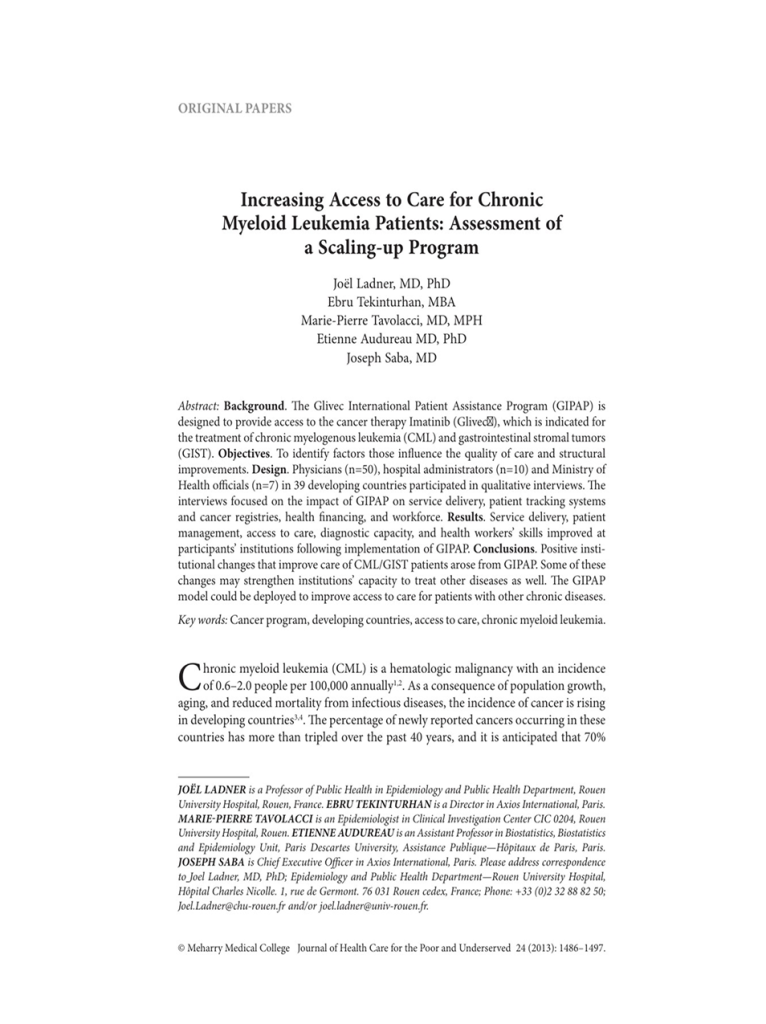
This study surveyed physicians, hospital administrators, and health ministry officials in 39 developing countries to understand how the Glivec International Patient Assistance Program (GIPAP), which provides free leukemia medication, affected care beyond just the drug itself. Physicians reported maj
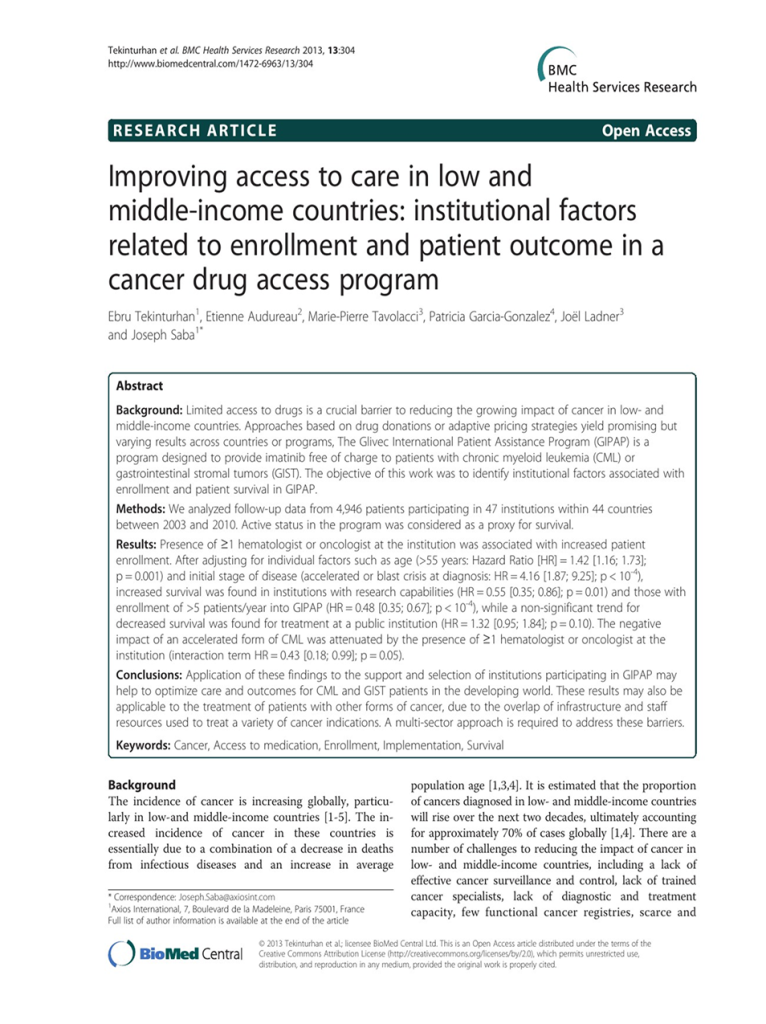
This study analyzed nearly 5,000 patients across 47 institutions in 44 countries enrolled in the same leukemia drug access program (GIPAP) to identify what institutional characteristics predict how many patients get enrolled and how well they do afterward. Having a hematologist or oncologist on staf
This business school case study examines a real pricing dilemma: a life-prolonging cancer drug priced at $1,000/month was unaffordable for most patients in China, and the case asks students to work through what pricing strategy a health access consultancy should recommend to the drug's manufacturer.
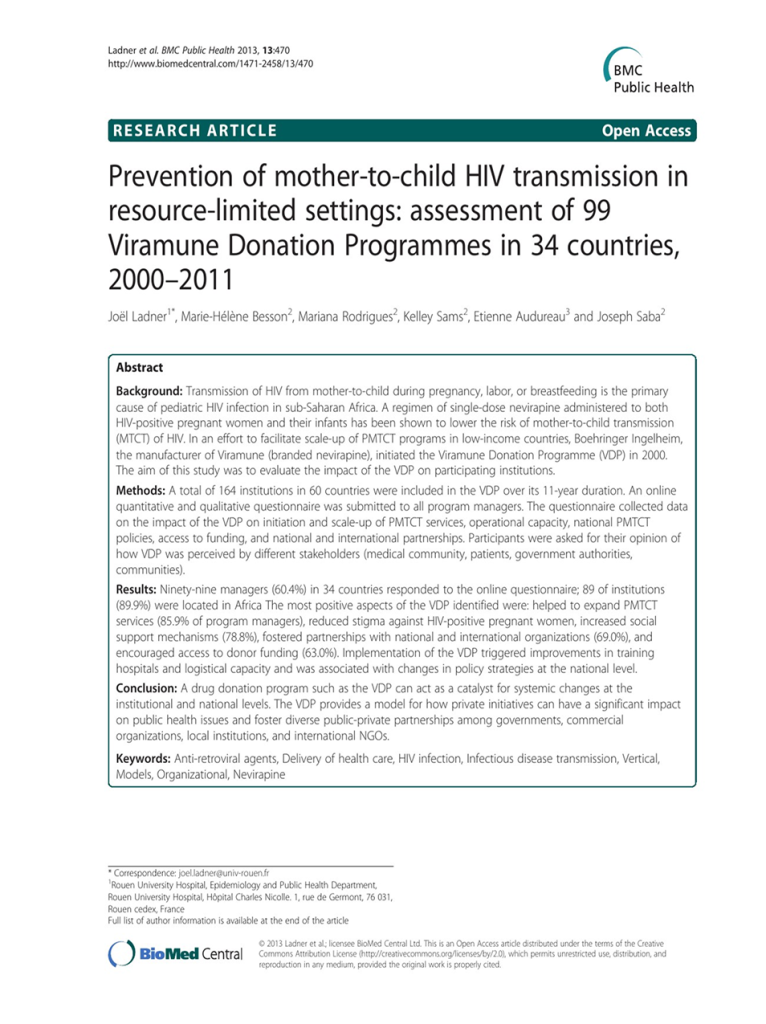
This study surveyed the managers of 99 institutions across 34 countries that participated in an 11-year HIV drug donation program aimed at preventing mothers from transmitting HIV to their babies. The large majority of program managers reported that the donation program expanded services, reduced st
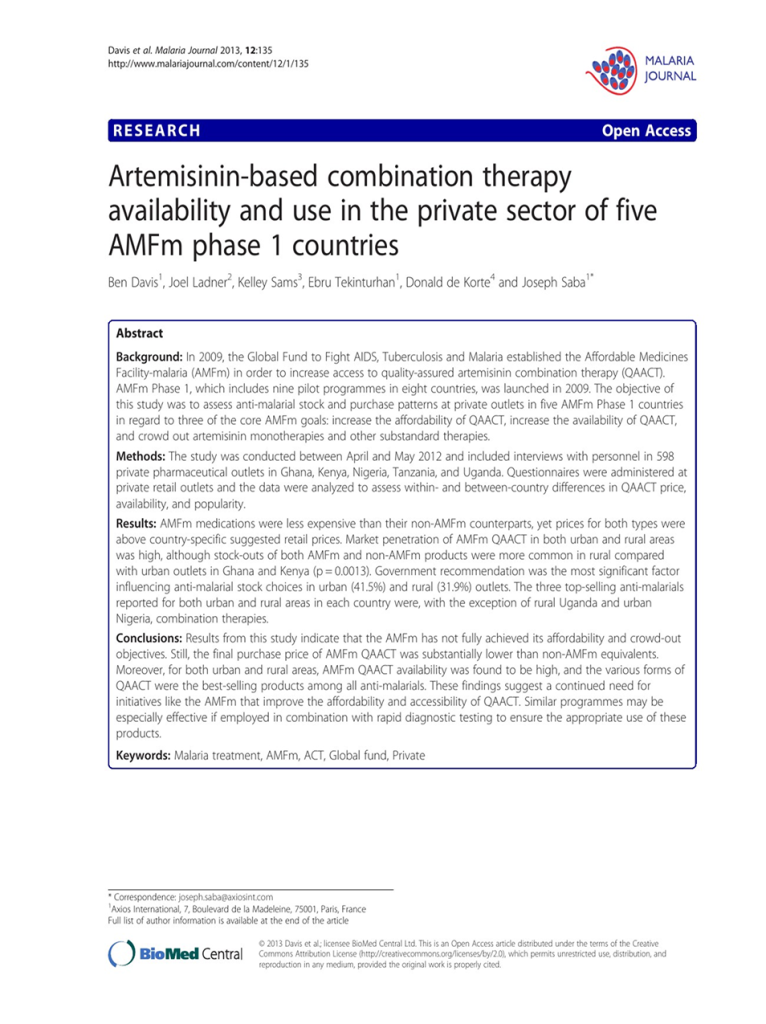
This study surveyed nearly 600 private pharmacies and drug shops in Ghana, Kenya, Nigeria, Tanzania, and Uganda to see how a Global Fund program (AMFm) affected the price and availability of quality malaria medicine in the private sector, where most patients in Africa actually seek treatment. Subsid
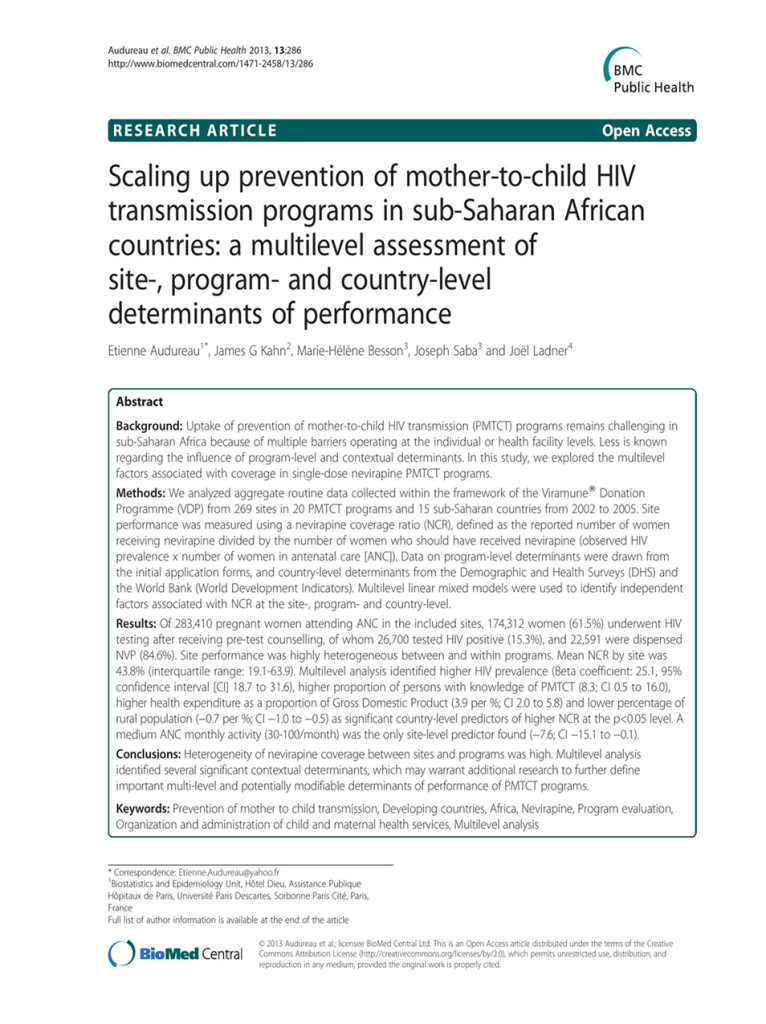
This study analyzed data from over 280,000 pregnant women across 269 clinical sites in 15 sub-Saharan African countries to understand why some HIV prevention programs reached far more eligible mothers than others. The analysis found that broader national context, like public awareness and healthcare
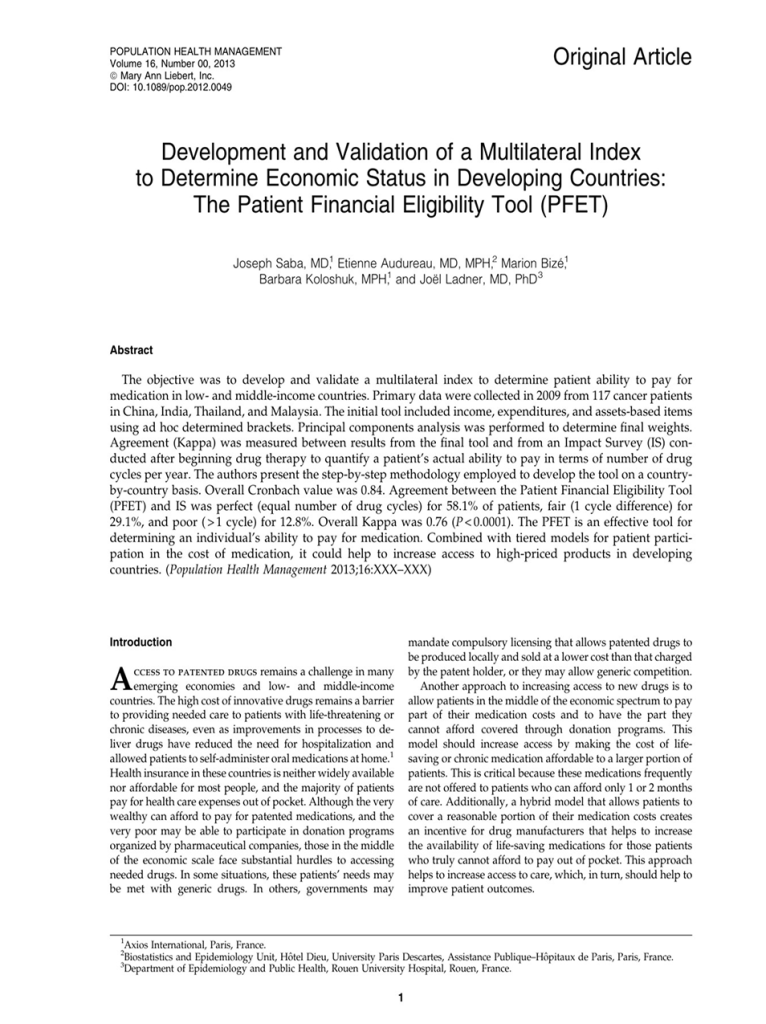
This is the original study that developed and tested the Patient Financial Evaluation Tool (PFET), using data from 117 cancer patients across China, India, Thailand, and Malaysia to see whether a combined measure of income, spending, and assets could accurately predict a patient's real ability to pa
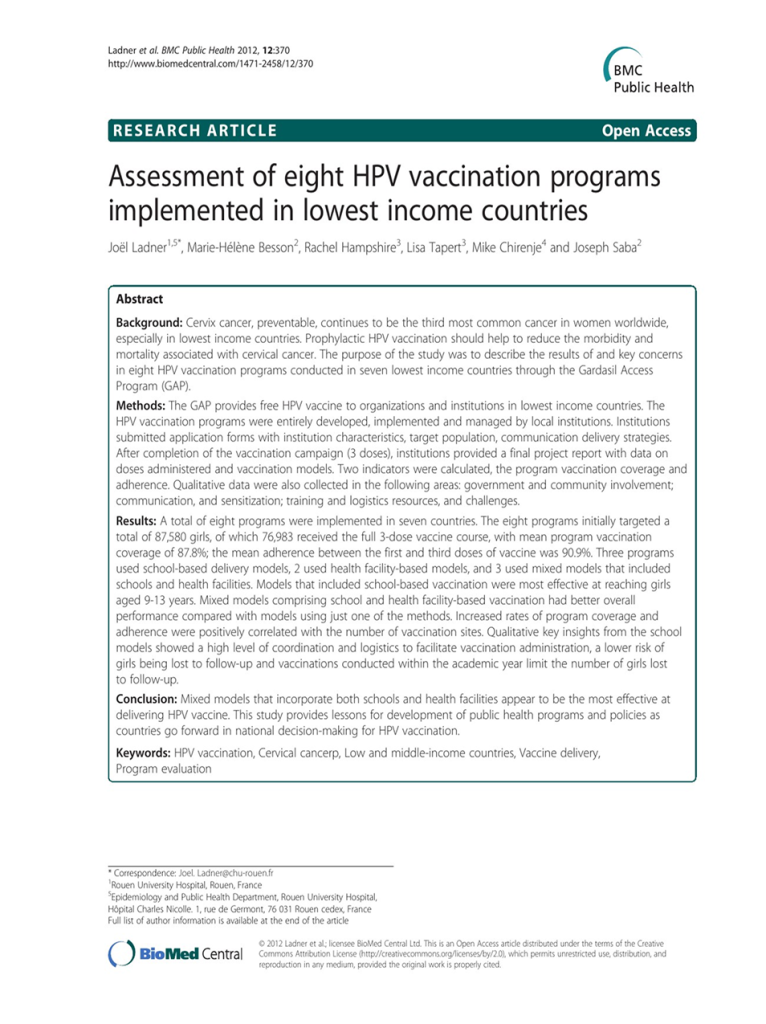
This study evaluated eight HPV vaccination programs run in seven low-income countries through the Gardasil Access Program, which provided free vaccine doses to local organizations to protect girls against the virus responsible for most cervical cancer. Programs used one of three delivery approaches
This study interviewed 69 breast cancer patients in Ethiopia's national cancer treatment program to understand how women first noticed symptoms and what finally motivated them to seek medical care. Researchers found that nearly all participants first noticed a lump, but most did not seek help right
...