
Key Takeaways
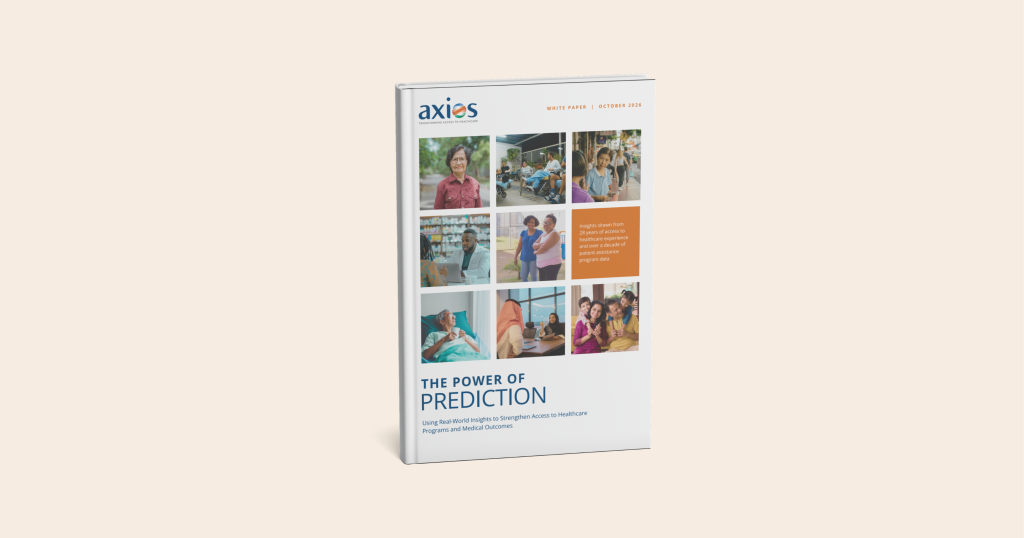
Drawing on real-world data from 18,076 patients across 21 countries and 87 oncology medicines, this white paper highlights how real-world data can help identify patterns, anticipate barriers, and inform more proactive, patient-centered access program design and management.
As cancer treatments continue to advance, the next frontier of access is not just removing barriers, but anticipating them before they stand in patients’ way.
Read the white paper to explore how predictive access can help shape more sustainable, effective patient access programs.
Overview
Cancer medicines are advancing rapidly, but access has not kept pace. Patient Assistance Programs (PAPs) help address financial barriers to treatment, yet patient outcomes are shaped by a broader range of factors, including healthcare setting, cancer type, treatment characteristics, patient circumstances, and program design.
Limited published evidence exists on how these factors impact patient outcomes. As larger real-world datasets from patients enrolled in PAPs become available, there is an opportunity to move toward predictive access, using data to identify patterns, anticipate potential barriers, and inform more proactive program design and management. This report presents the first large-scale analysis of administrative data from a multi-country, multi-product oncology PAP portfolio managed by Axios International.
The analysis examines 18,076 patients across 21 countries and 87 oncology medicines, identifying factors associated with four key outcomes: survival, treatment duration, serious adverse events, and dropout.
Key Findings: Factors associated with patient outcomes in PAPs
Country plays a significant role.
Country was strongly associated with all four outcomes, even after controlling for patient, disease, and product factors.
Patient journeys differ by cancer type.
Gastrointestinal and head and neck cancers were linked to worse survival and shorter treatment. Patients with hematologic malignancies stayed on treatment longer and were less likely to drop out.
Treatment duration and completion vary by how a medicine is given.
Oral therapies were associated with longer treatment duration but higher odds of dropout before completion than intravenous therapies, possibly because home-based treatment offers fewer touchpoints with the health system.
Support systems can make a difference.
A registered caregiver was linked to longer treatment. Pharmacies with more PAP experience were linked to fewer serious adverse events.
The shift to more predictive, sustainable access
This study represents the first phase of a broader effort to make PAP design and management more predictive. Its findings show that the operational data generated by PAPs can do more than document the past. It can reveal the patterns behind differences in patient outcomes and help identify challenges and solutions before they emerge.
The opportunity now is to make predictive access standard practice, combining real-world data, advanced analytics, and patient-centered design to build and manage programs that respond to the needs of each patient and market. The next frontier of access is anticipating what patients will need next and acting before barriers stand in their way.