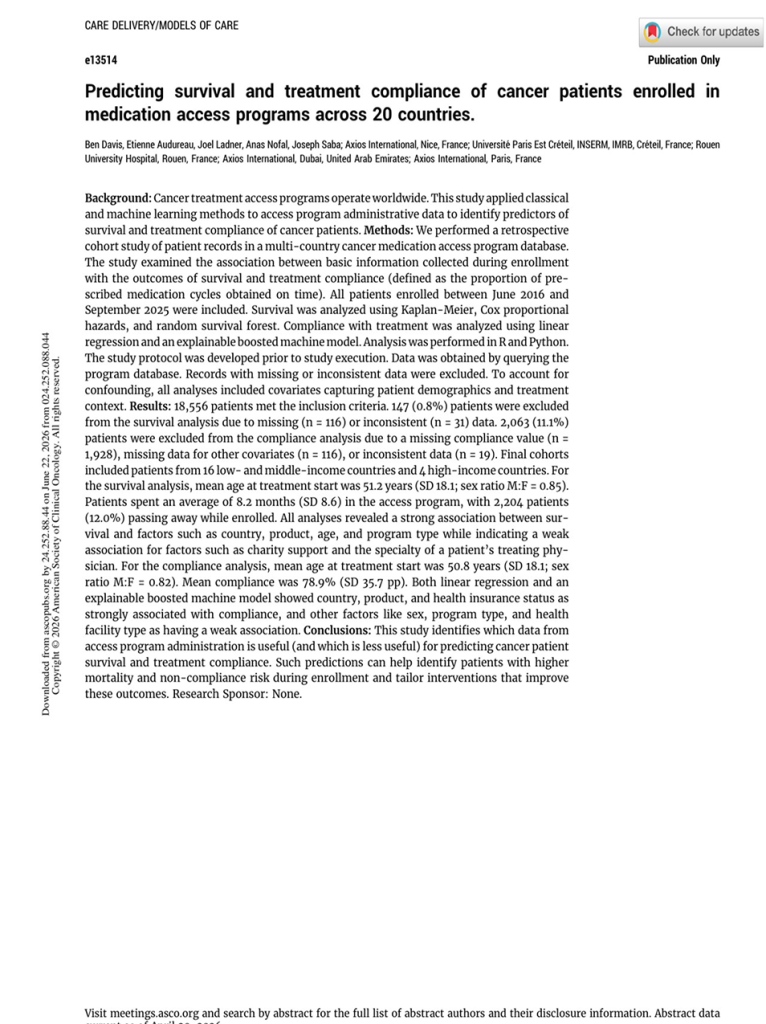

This study surveyed the managers of 29 HPV vaccination programs across 19 countries to capture the practical obstacles and solutions encountered while rolling out vaccination campaigns for adolescent girls. Misinformation about the vaccine’s safety, difficulty tracking girls for follow-up doses, and under-resourced health systems emerged as the most common barriers, while community engagement and integration with existing health services helped programs succeed.
Publication
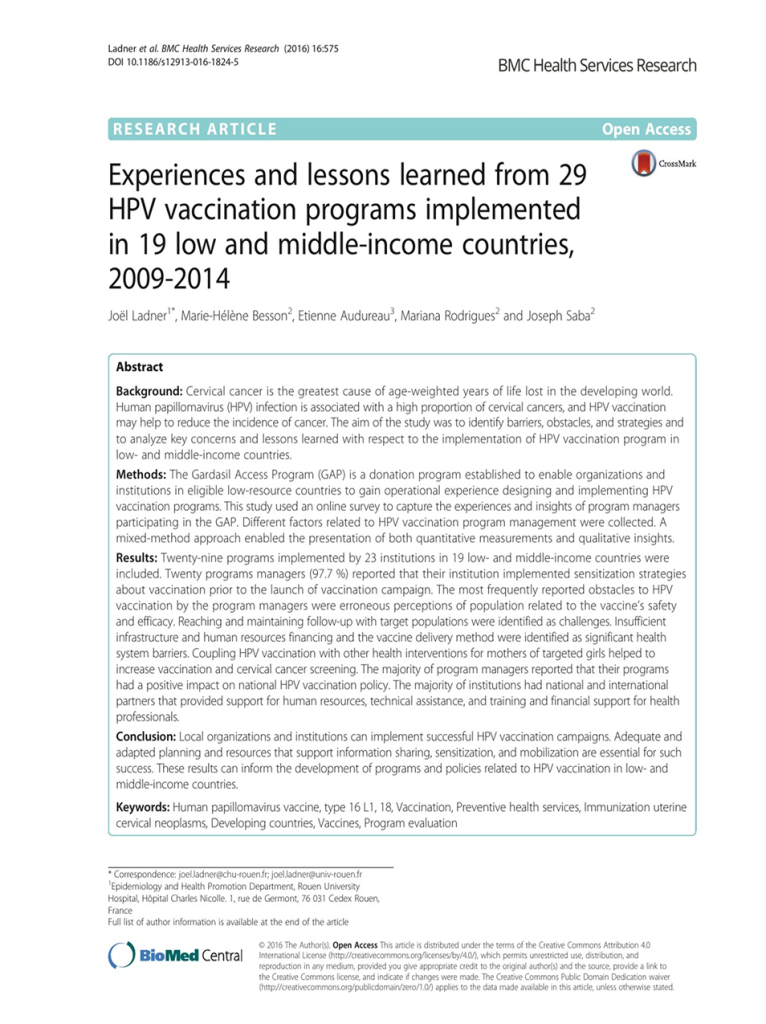
Experiences and Lessons Learned from 29 HPV Vaccination Programs in 19 Low and Middle-Income Countries, 2009–2014
Ladner J, Besson MH, Audureau E, Rodrigues M, & Saba J.
BMC Health Services Research
Published
Key Takeaways
This study surveyed the managers of 29 HPV vaccination programs across 19 countries to capture the practical obstacles and solutions encountered while rolling out vaccination campaigns for adolescent girls. Misinformation about the vaccine’s safety, difficulty tracking girls for follow-up doses, and under-resourced health systems emerged as the most common barriers, while community engagement and integration with existing health services helped programs succeed.
- The most common obstacle programs faced was false rumors, including the belief that the vaccine was a covert method of sterilization, underscoring how essential clear public communication is to any new vaccine’s success.
- Reaching girls for follow-up doses was a widespread struggle, since routine immunization systems are built for young children, not adolescents who move, change schools, or are harder to track down.
- Pairing HPV vaccination with cervical cancer screening for mothers helped extend the program’s reach and value beyond the girls themselves.
- The majority of programs went on to influence national vaccination policy, showing that small donation-funded pilots can have an outsized, lasting impact on how countries approach cervical cancer prevention.
Resources
Recent Publications