
This study analyzed 21 HPV vaccination programs across 14 low- and middle-income countries, all run through a vaccine donation program, to identify which delivery approaches got the most girls fully vaccinated. Programs run out of schools or health clinics, and those managed by NGOs rather than government ministries, achieved meaningfully higher vaccination rates.
Publication
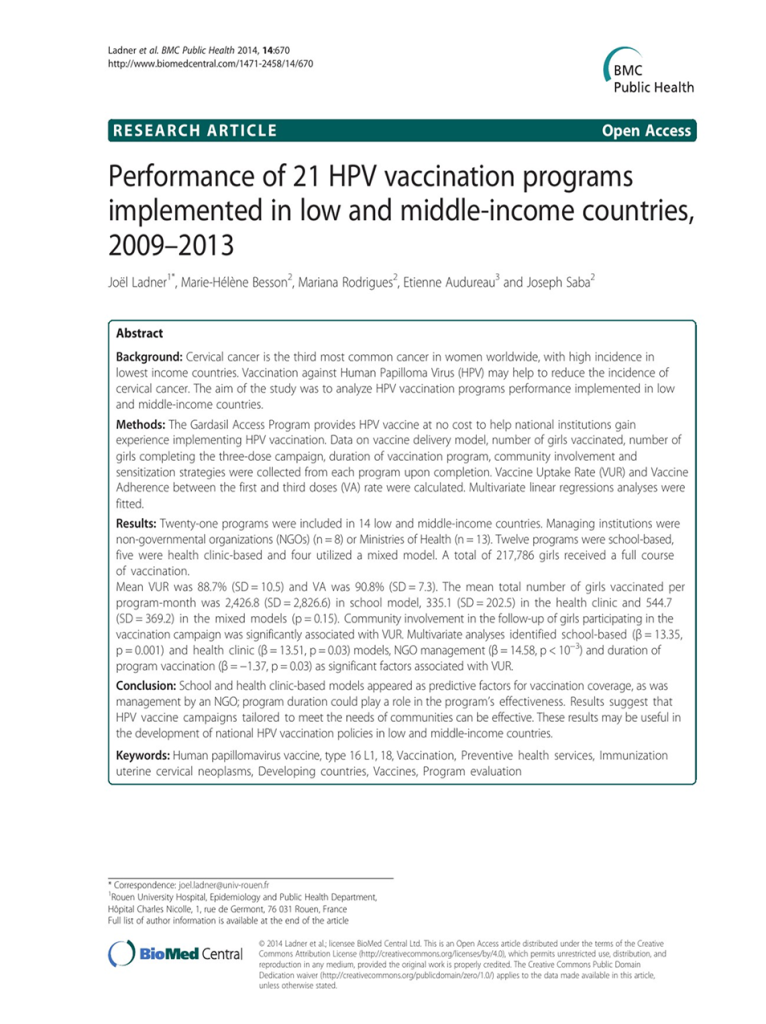
Performance of 21 HPV Vaccination Programs in Low and Middle-Income Countries, 2009–2013
Ladner J, Besson MH, Rodrigues M, Audureau E, & Saba J.
BMC Public Health
Published
Key Takeaways
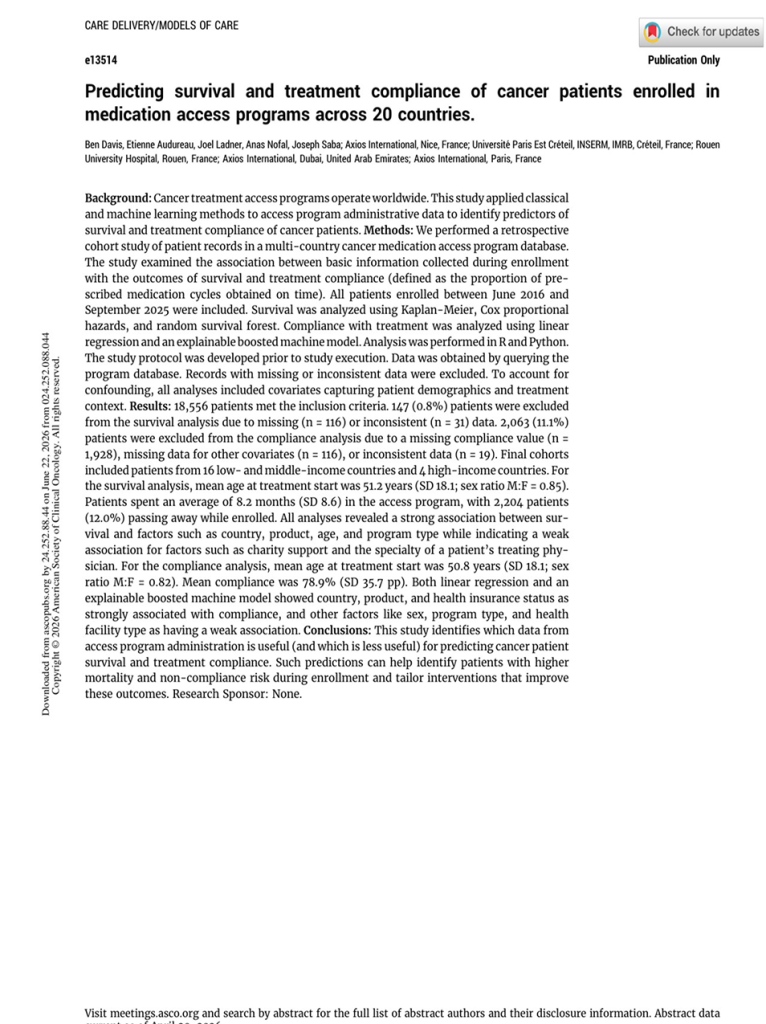
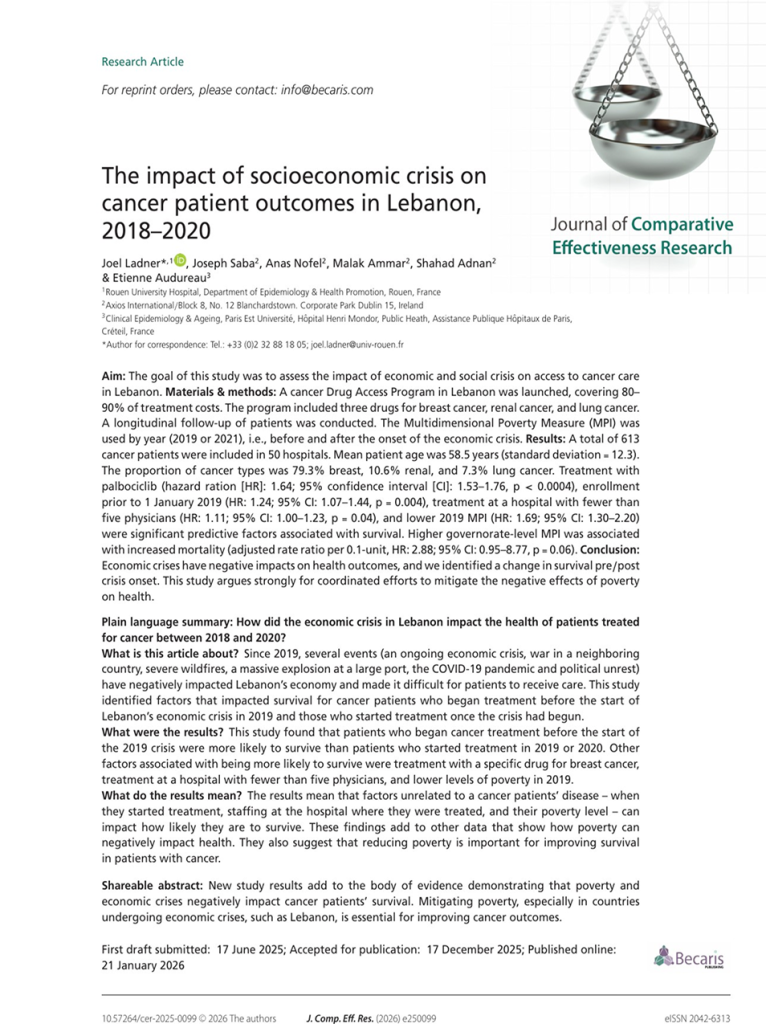
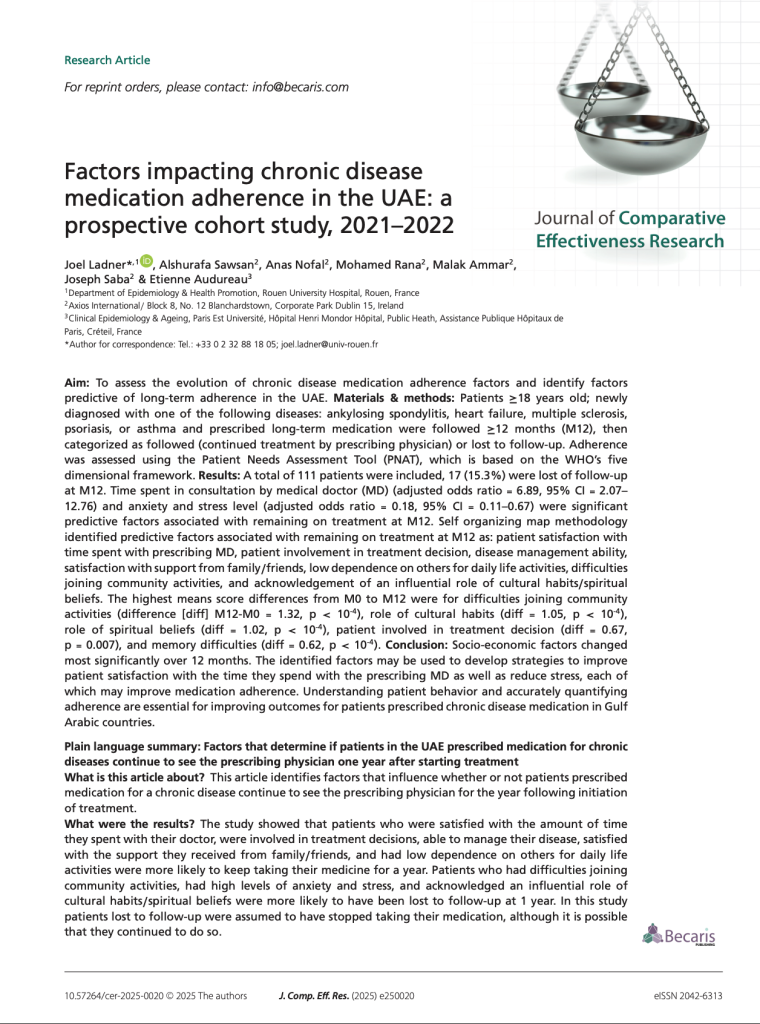
This study analyzed 21 HPV vaccination programs across 14 low- and middle-income countries, all run through a vaccine donation program, to identify which delivery approaches got the most girls fully vaccinated. Programs run out of schools or health clinics, and those managed by NGOs rather than government ministries, achieved meaningfully higher vaccination rates.
- Over 217,000 girls received the full three-dose vaccine course across the 21 programs, with an average uptake rate of nearly 89%.
- School-based vaccine delivery consistently outperformed other models, likely because it reaches girls where they already are instead of requiring a special clinic visit.
- Programs run by NGOs achieved notably higher vaccination rates than those run by government health ministries, suggesting smaller, more agile organizations may execute vaccine rollouts faster.
- Shows that the choice of delivery model and managing institution can be just as important to a vaccination program’s success as the vaccine supply itself.
Resources
Recent Publications