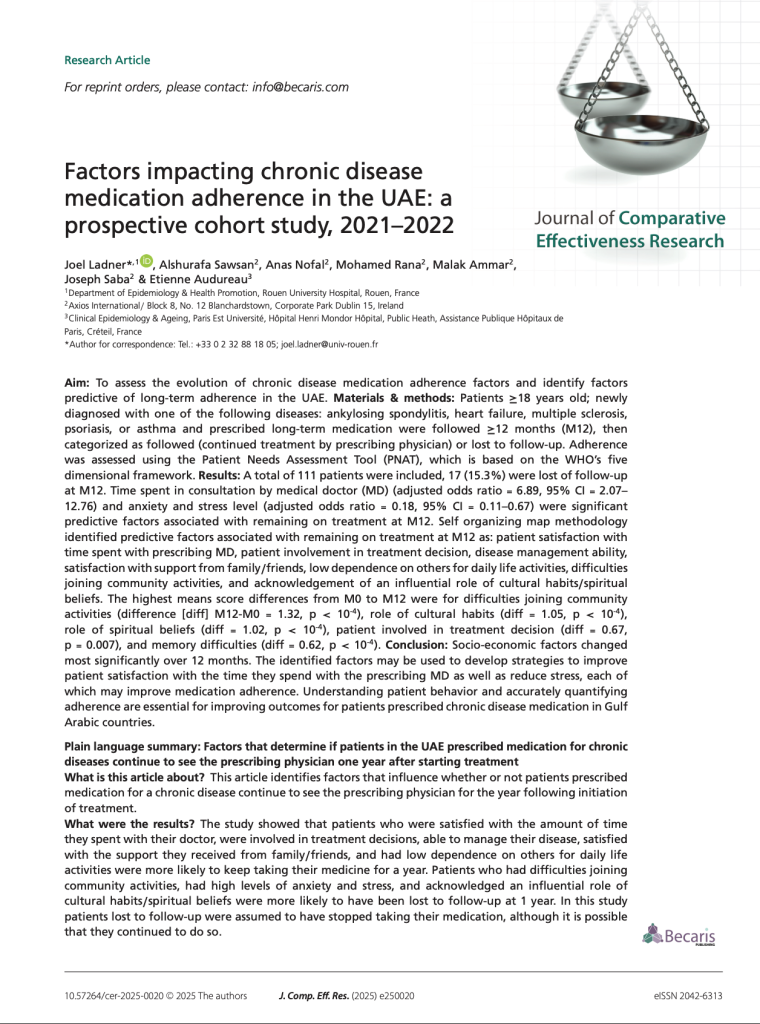

This study followed 460 lymphoma patients across seven countries enrolled in a subsidized cancer drug program to see what factors influenced whether they survived and stayed on treatment. Patients who received regular phone check-ins had notably better survival, and doctors who treated more patients on this therapy were less likely to pull patients off treatment early.
Publication
Phone Contacts and Treatment Discontinuation Predict Survival Cancer Patients in a Subsidized Drug Access Program
Joël Ladner, Farah Madi, Roshel Jayasundera, Joseph Saba, and Etienne Audureau
Journal of Comparative Effectiveness Research
Published
Key Takeaways
This study followed 460 lymphoma patients across seven countries enrolled in a subsidized cancer drug program to see what factors influenced whether they survived and stayed on treatment. Patients who received regular phone check-ins had notably better survival, and doctors who treated more patients on this therapy were less likely to pull patients off treatment early.
- Regular phone-based check-ins with patients, covering how they were doing, medication questions, and side effects, were linked to meaningfully better survival, while email contact alone was not.
- Doctors who treated more patients on this specific therapy were less likely to stop a patient’s treatment early, suggesting that physician experience with a specific drug plays a real role in whether patients stay the course.
- Side effects were the single biggest factor tied to both death and a doctor’s decision to stop treatment, underscoring how critical side-effect management is to keeping patients on therapy.
- Shows that a relatively simple, low-cost intervention, consistent phone support, can meaningfully improve outcomes in access programs, especially in countries where doctors may have limited hands-on experience with certain treatments.
Resources
Recent Publications