
Publication
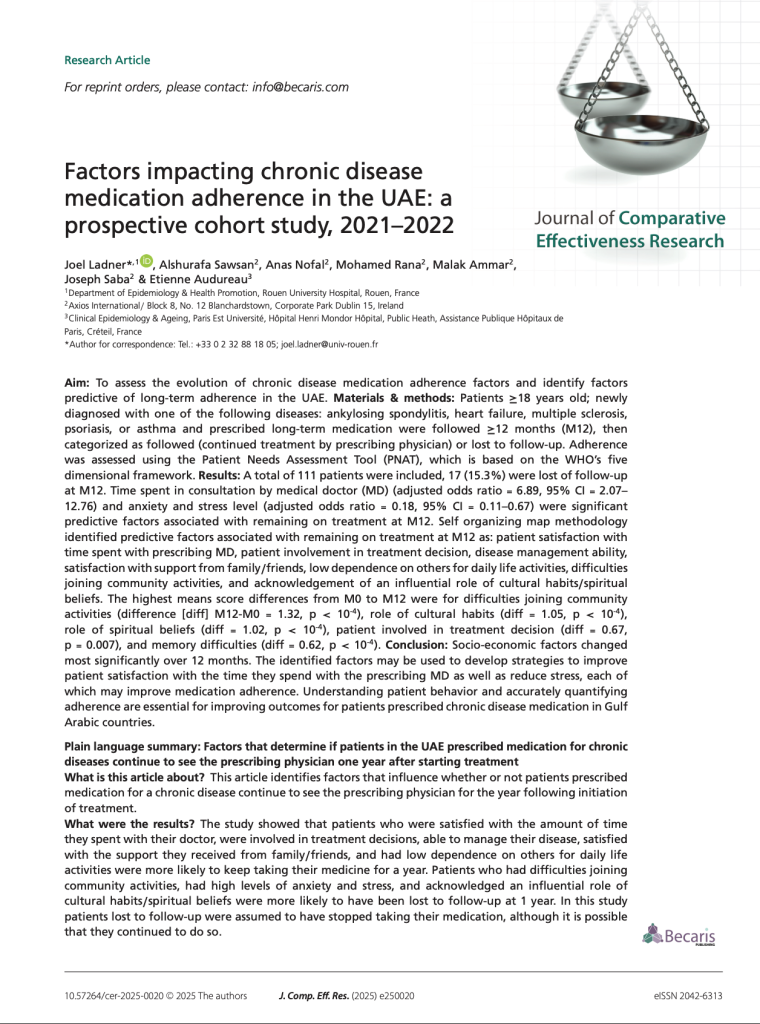
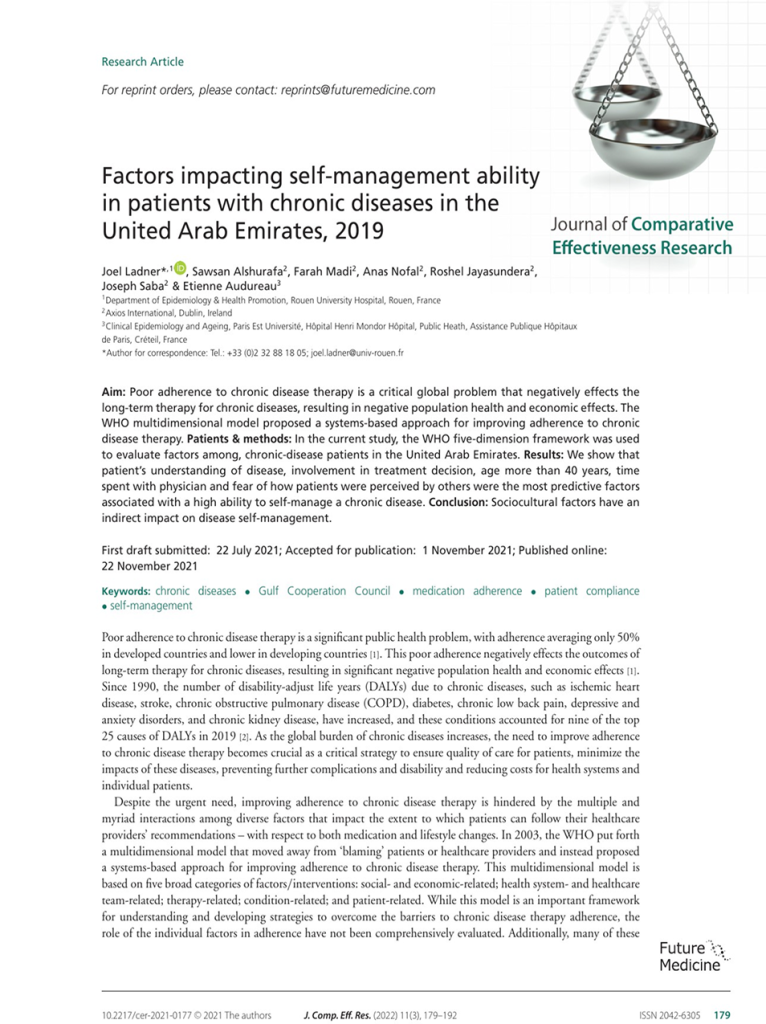
Factors Impacting Self-Management Ability in Patients with Chronic Diseases in the United Arab Emirates, 2019
Ladner J, Alshurafa S, Madi F, Nofal A, Jayasundera R, Saba J & Audureau E
Journal of Comparative Effectiveness Research
Published
Key Takeaways
This study looked at over 100 patients in the UAE managing chronic conditions like heart failure, multiple sclerosis, and psoriasis to understand what helps someone successfully manage their disease day-to-day. Patients who understood their disease well, felt involved in treatment decisions, and had more time with their doctor were far more likely to manage their condition successfully, while cultural and social factors played a more indirect role.
- Patients who understood their condition and who felt involved in choosing their treatment were dramatically more likely to report strong self-management ability.
- Patients over 40 and those who felt they had adequate time with their doctor also showed stronger self-management skills.
- Social and cultural factors, like fear of how others perceive a visible condition, didn’t directly predict self-management but clearly interacted with and reinforced other challenges, especially for patients with visible symptoms like psoriasis.
- This is one of the first studies of its kind in the Gulf region, and it points to a clear, low-cost lever for improving outcomes: more time and clearer communication between patients and doctors.
Resources
Recent Publications