
This study surveyed nearly 600 private pharmacies and drug shops in Ghana, Kenya, Nigeria, Tanzania, and Uganda to see how a Global Fund program (AMFm) affected the price and availability of quality malaria medicine in the private sector, where most patients in Africa actually seek treatment. Subsidized malaria drugs were consistently cheaper and more available than unsubsidized versions, but prices still exceeded target levels, and older, less effective malaria drugs remained on shelves.
Publication
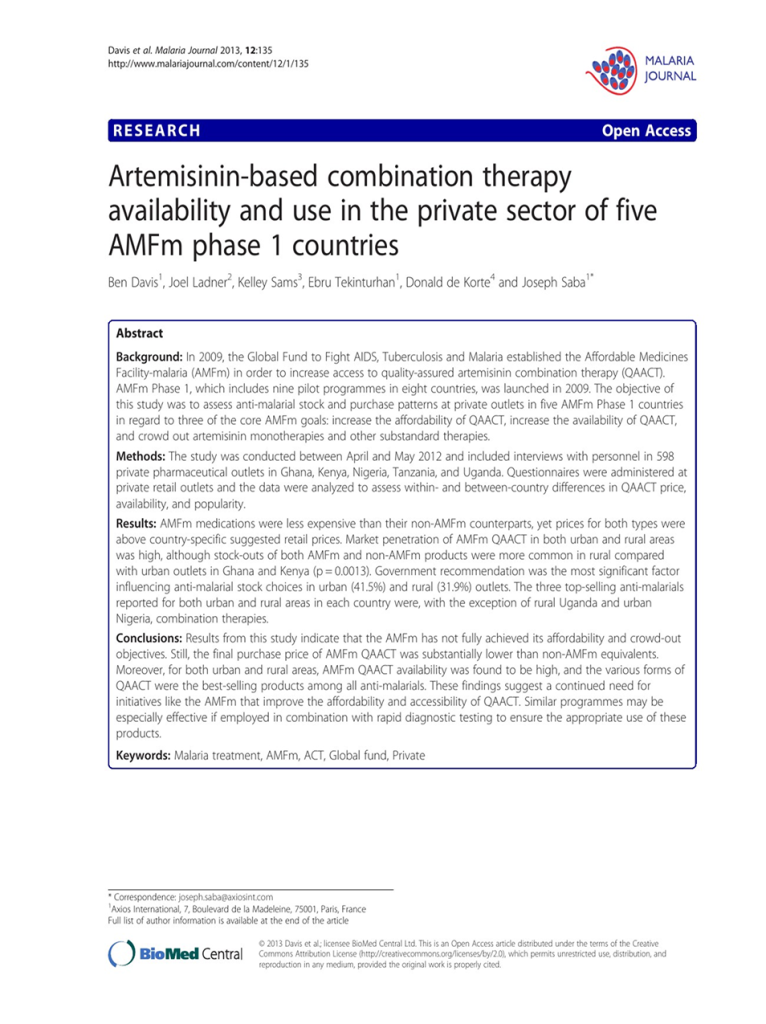
Artemisinin-Based Combination Therapy Availability and Use in the Private Sector of Five AMFm Phase 1 Countries
Davis B, Ladner J, Sams K, Tekinturhan E, de Korte D, & Saba J.
Malaria Journal
Published
Key Takeaways
This study surveyed nearly 600 private pharmacies and drug shops in Ghana, Kenya, Nigeria, Tanzania, and Uganda to see how a Global Fund program (AMFm) affected the price and availability of quality malaria medicine in the private sector, where most patients in Africa actually seek treatment. Subsidized malaria drugs were consistently cheaper and more available than unsubsidized versions, but prices still exceeded target levels, and older, less effective malaria drugs remained on shelves.
- Subsidized malaria treatments cost patients up to eight times less than unsubsidized versions of the same drug, showing subsidies can meaningfully cut out-of-pocket costs.
- Even with subsidies, prices in most countries still exceeded the government’s target price, showing that subsidy programs alone don’t guarantee truly affordable medicine.
- Outdated, less-effective malaria treatments remained among the top sellers in several countries, showing that supply-side subsidies must be paired with efforts to shift what pharmacies actually stock and recommend.
- Demonstrates that private pharmacies are a critical, underused lever for improving access to effective treatment in regions where formal healthcare is hard to reach.
Resources
Recent Publications